Vietnam-India Trade Deal 2026: 13 Pacts Signed with a $25 Billion Bilateral Trade Goal by 2030
Vietnam and India signed 13 major agreements under the Vietnam-India Trade Deal 2026, targeting $25 billion in bilateral trade by 2030 across key sectors, including commerce, technology, energy, and infrastructure.

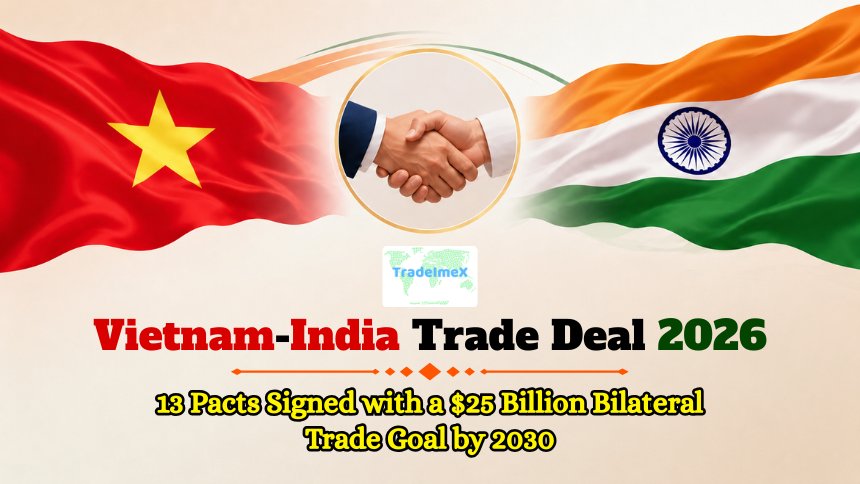
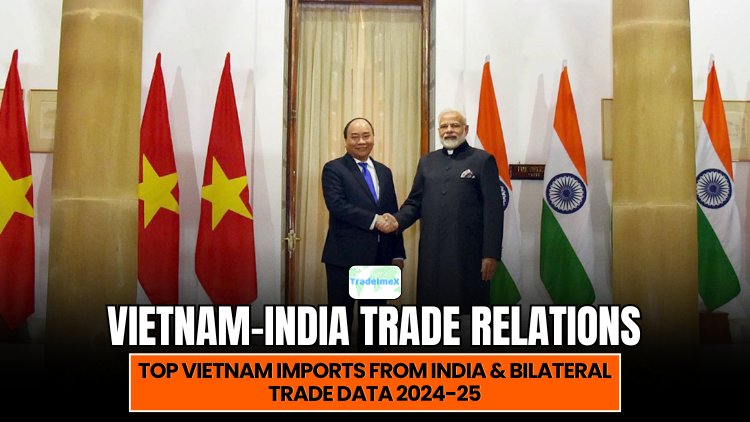
The economic relationship between Vietnam and India has entered a new phase in 2026. During Vietnamese President To Lam’s visit to New Delhi, both countries elevated their partnership to an “Enhanced Comprehensive Strategic Partnership” and signed 13 agreements across sectors ranging from critical minerals and digital payments to pharmaceuticals and tourism. At the center of the announcement was a bold target: increasing bilateral trade to $25 billion by 2030. According to the latest Vietnam import data and Vietnam export data, the total value of Vietnam-India trade reached around $16 billion in 2025. For two countries that already see each other as strategic partners in the Indo-Pacific, the deal represents far more than another diplomatic milestone.
It reflects changing global supply chains, rising geopolitical competition in Asia, the growing importance of ASEAN, and the need for diversified manufacturing & technology partnerships. The agreement also comes at a time when businesses across Asia are actively searching for alternatives to concentrated supply chains, according to Asia trade data. Vietnam has emerged as one of Asia’s fastest-growing manufacturing hubs, while India continues expanding its role in pharmaceuticals, technology, renewable energy, and digital infrastructure.
Together, the two economies are positioning themselves as long-term partners in trade, investment & strategic industries. Let's dive into the details of the 13 pacts that were signed and the ambitious $25 billion bilateral trade goal set for Vietnam-India trade by 2030.
Why the Vietnam-India Trade Relationship Matters
Vietnam and India have steadily strengthened economic ties over the past decade. Bilateral trade has nearly doubled in recent years, crossing the $16 billion mark before the new 2030 target was announced. Vietnam has become one of India’s most important partners in Southeast Asia, while India is increasingly important for Vietnam’s diversification strategy, as per the Vietnam-India trade relations. Several factors explain why this partnership is gaining momentum:
-
Both countries want to reduce overdependence on single-country supply chains.
-
ASEAN is becoming a major global manufacturing center.
-
India’s “Act East Policy” aligns closely with Vietnam’s regional trade ambitions.
-
Rising geopolitical tensions in the Indo-Pacific are pushing countries toward stronger economic alliances.
-
Digital trade and technology partnerships are becoming central to future growth.
The 2026 agreements from the Vietnam-India Enhanced Comprehensive Strategic Partnership show that the relationship is no longer limited to conventional merchandise trade. The partnership is now expanding into high-value sectors such as rare earths, semiconductor-related supply chains, fintech connectivity, healthcare regulation, renewable energy, and maritime cooperation.
The 13 Agreements Signed in 2026
The 13 pacts signed between Vietnam and India cover multiple sectors that are expected to drive long-term economic cooperation.
1. Critical Minerals and Rare Earth Cooperation
One of the most strategically important agreements focuses on critical minerals and rare earth elements. Rare earths are essential for electric vehicles, renewable energy systems, batteries, defense technologies, semiconductors, and advanced electronics. Global competition for access to these materials has intensified as countries attempt to secure resilient supply chains.
Vietnam possesses significant rare earth reserves, while India is working to strengthen domestic processing capabilities & reduce supply chain vulnerabilities. The cooperation agreement between IREL (India) and Vietnam’s Institute for Technology of Radioactive and Rare Elements is expected to accelerate joint research, mineral processing, and technology collaboration. This agreement could become one of the defining pillars of the Vietnam-India economic relationship over the next decade.
2. Digital Payments Connectivity
Another headline development is the push toward cross-border digital payments. India’s digital payments ecosystem has become one of the most advanced in the world, particularly through UPI-based systems. Vietnam is rapidly modernizing its own financial infrastructure, making fintech cooperation a natural fit. The agreements signed between payment authorities and banking regulators aim to enable QR-code interoperability and smoother digital transactions between both countries.
For travelers, businesses, and SMEs, this could significantly reduce payment friction and transaction costs. It also reflects a broader regional trend where Asian economies are increasingly developing interconnected digital payment systems without relying entirely on traditional international payment networks.
3. Pharmaceutical Cooperation
Healthcare and pharmaceutical collaboration emerged as another important area. Vietnam’s healthcare market is growing rapidly due to rising incomes, urbanization, & healthcare demand. India, meanwhile, is one of the world’s leading pharmaceutical producers. The agreement between drug regulatory authorities is expected to simplify approval processes, improve standards coordination, & increase access to medicines. This creates opportunities for:
-
Generic medicines
-
Medical devices
-
Biotech collaboration
-
Healthcare investments
-
Clinical research partnerships
As healthcare spending rises across Southeast Asia, this sector alone could become a major contributor to bilateral trade growth.
4. Agricultural Market Access
The 2026 discussions also focused heavily on agricultural trade facilitation. Vietnam agreed to expand access for Indian agricultural goods such as grapes & pomegranates, while India opened doors for Vietnamese durian and other agricultural products. Agriculture may not receive the same media attention as technology or defense, but it remains an important pillar of bilateral trade. Improved agricultural market access can benefit farmers, food processors, and retail businesses in both countries.
5. Tourism and Cultural Cooperation
Tourism cooperation is another area with strong growth potential. Direct flight connectivity between Indian and Vietnamese cities has improved significantly in recent years. Vietnam has become increasingly popular among Indian tourists due to affordability, beaches, cultural attractions, and simplified visa policies. At the same time, Buddhist heritage tourism & cultural exchanges continue to strengthen people-to-people ties. The new agreements are expected to promote:
-
Tourism investments
-
Hospitality partnerships
-
Cultural exchange programs
-
Educational cooperation
-
Film and media collaboration
Tourism-driven economic activity can create ripple effects across aviation, hospitality, retail, and transportation sectors.
6. Technology and Digital Transformation
Technology cooperation featured prominently in the 2026 pact announcements. Both countries are prioritizing:
-
Artificial intelligence
-
Cybersecurity
-
Digital governance
-
Electronics manufacturing
-
Smart city development
-
Data infrastructure
Vietnam’s manufacturing ecosystem and India’s software and digital expertise create strong complementarities. Companies operating in electronics, SaaS, cloud services, and enterprise technology could benefit from deeper integration between the two markets.
Vietnam-India Trade in The Last 10 Years: Historical Bilateral Trade Data
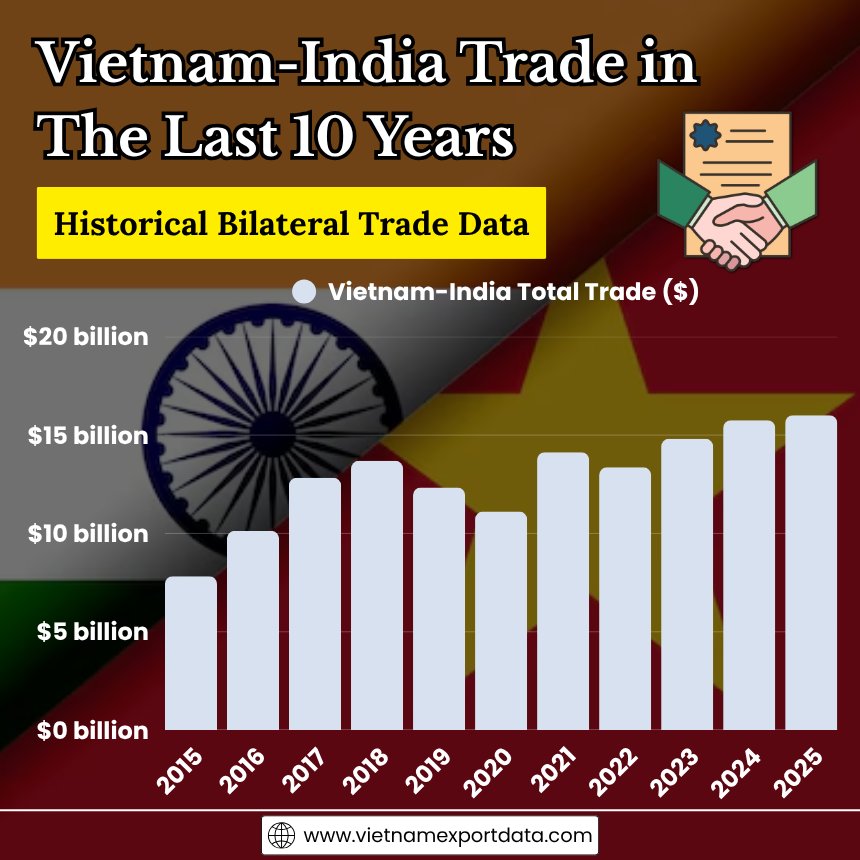
|
Year of Trade |
Vietnam-India Total Trade ($) |
|
2015 |
$7.82 billion |
|
2016 |
$10.13 billion |
|
2017 |
$12.83 billion |
|
2018 |
$13.69 billion |
|
2019 |
$12.34 billion |
|
2020 |
$11.11 billion |
|
2021 |
$14.13 billion |
|
2022 |
$13.36 billion |
|
2023 |
$14.81 billion |
|
2024 |
$15.76 billion |
|
2025 |
$16.01 billion |

The Strategic Importance of the India-Vietnam Trade Goal
The $25 billion trade target is ambitious but realistic. To understand its significance, it helps to look at the growth trajectory. Bilateral trade between Vietnam and India has already crossed $16 billion. Reaching $25 billion by 2030 would require sustained annual growth, stronger trade connectivity, reduced trade barriers, and deeper investment cooperation. Several sectors are likely to drive this growth.
Electronics and Manufacturing
Vietnam has become a major manufacturing base for electronics and consumer goods. Global companies continue shifting production capacity toward Vietnam as part of broader supply chain diversification strategies. India, meanwhile, is aggressively expanding domestic manufacturing through industrial policy support, electronics incentives, and infrastructure development. Vietnam also exports a substantial amount of electronics to India, as per the data on Vietnam customs export data of electronics. Stronger Vietnam-India industrial cooperation could support:
-
Component manufacturing
-
Electronics assembly
-
Semiconductor supply chains
-
Industrial machinery
-
Trade infrastructure
Renewable Energy
Energy cooperation is becoming increasingly important. Both countries are investing heavily in renewable energy and energy security. Areas of cooperation may include:
-
Solar energy projects
-
Wind power
-
Battery storage
-
Green hydrogen
-
Grid modernization
-
Energy technology investments
As global energy transition spending rises, renewable energy partnerships could become a major source of investment flows.
Maritime and Trade Cooperation
Vietnam and India both occupy strategically important maritime positions in the Indo-Pacific. Shipping connectivity and port infrastructure will play a major role in reaching the 2030 trade target. Potential developments include:
-
Expanded shipping routes
-
Faster cargo movement
-
Port modernization
-
Trade partnerships
-
Supply chain integration
Lower trade costs could significantly improve trade competitiveness.
How the Deal Fits into the Indo-Pacific Strategy
The 2026 agreements are not just about economics. They also reflect the broader geopolitical changes happening across Asia. Vietnam and India share concerns about supply chain resilience, maritime security, & strategic balance in the Indo-Pacific region. Both countries support:
-
Freedom of navigation
-
Regional stability
-
Diversified economic partnerships
-
Stronger ASEAN engagement
-
Reduced dependence on concentrated supply chains
Vietnam’s location near major shipping routes and India’s growing regional influence make the partnership strategically important. The agreement also strengthens India’s engagement with ASEAN economies at a time when Southeast Asia is becoming central to global manufacturing and trade growth.
Opportunities for Businesses and Investors
The Vietnam-India trade expansion creates opportunities across multiple industries.
Manufacturing Companies
Manufacturers could benefit from:
-
Joint ventures
-
Lower sourcing risks
-
Regional supply chain integration
-
Industrial partnerships
-
Expanded market access
Electronics, textiles, chemicals, engineering goods, and machinery sectors may see increased activity.
Technology Firms
Technology companies could explore opportunities in:
-
Fintech
-
AI solutions
-
Enterprise software
-
Cybersecurity
-
Cloud infrastructure
-
Digital public infrastructure
India’s software ecosystem, combined with Vietnam’s manufacturing strength, creates a powerful regional combination.
Healthcare and Pharma Companies
Healthcare demand across Southeast Asia is rising rapidly. The pharmaceutical agreements could encourage:
-
Distribution partnerships
-
Local manufacturing
-
Healthcare investments
-
Medical research cooperation
-
Digital health initiatives
Challenges That Could Affect the 2030 Goal
Despite strong momentum, there are several challenges that could slow progress.
Trade Barriers and Standards
Differences in technical standards, certification requirements, and regulatory procedures can complicate cross-border trade. Businesses often face delays due to documentation, product approvals, & compliance requirements. Both governments have acknowledged the need to reduce friction and improve market access.
Shipment Bottlenecks
Efficient trade remains critical. Shipping delays, infrastructure limitations, and rising shipment costs can impact competitiveness. Investments in ports, shipping routes, & customs modernization will be important.
Global Economic Uncertainty
The global economy remains volatile due to inflation pressures, geopolitical tensions, & changing trade policies. External shocks could affect trade growth targets. However, stronger regional partnerships may also help both countries reduce exposure to global disruptions.
Competition from Other Trade Partnerships
Both Vietnam and India maintain multiple trade relationships. Vietnam is deeply integrated into global supply chains through agreements with several major economies. India is simultaneously pursuing multiple bilateral and regional trade negotiations. Balancing competing economic interests while deepening bilateral cooperation will require careful policy coordination.
Why ASEAN Matters in This Partnership
ASEAN remains central to the Vietnam-India relationship. Vietnam is one of ASEAN’s fastest-growing economies and increasingly acts as a gateway for companies seeking access to Southeast Asian markets. India has long sought deeper economic integration with ASEAN through trade, connectivity, and strategic cooperation. The review of the ASEAN-India Trade in Goods Agreement is expected to become an important factor in improving regional trade efficiency. A modernized agreement could:
-
Simplify tariff structures
-
Improve trade facilitation
-
Reduce compliance complexity
-
Encourage investment flows
-
Strengthen regional supply chains
As ASEAN’s economic influence grows, partnerships like Vietnam-India could become even more important.
The Future of Vietnam-India Economic Relations
The 2026 agreements suggest that the Vietnam-India partnership is entering a more mature and strategic phase. What makes this relationship particularly interesting is the level of complementarity between the two economies.
Vietnam offers:
-
Manufacturing efficiency
-
Strategic ASEAN positioning
-
Growing industrial capacity
-
Strong export-oriented infrastructure
India offers:
-
A massive consumer market
-
Advanced digital public infrastructure
-
Pharmaceutical strength
-
Technology capabilities
-
Expanding manufacturing ambitions
Together, these strengths create multiple opportunities for long-term cooperation. The partnership is also likely to evolve beyond trade into broader economic integration involving investment, technology transfer, energy security, trade, & digital infrastructure.
Conclusion and Final Verdict
In conclusion, the Vietnam-India Trade Deal 2026 is more than a collection of diplomatic agreements. It represents a strategic shift toward deeper economic integration between two rapidly growing Asian economies. The signing of 13 agreements and the ambitious $25 billion trade target by 2030 demonstrate how both countries are preparing for a future shaped by supply chain diversification, digital transformation, renewable energy, and regional economic realignment.
Critical minerals, digital payments, pharmaceuticals, manufacturing, and technology are likely to become the major drivers of the next phase of growth. While challenges remain, the direction is clear. Vietnam and India are positioning themselves as long-term economic partners in one of the world’s most important growth regions. For businesses, investors, and policymakers, the partnership is worth watching closely. The next five years could redefine how the two economies collaborate across trade, technology, infrastructure, and strategic industries throughout the Indo-Pacific.
Note For Our Readers
We hope you found this blog on the Vietnam-India Trade Deal 2026, the 13 signed agreements, and the ambitious $25 billion bilateral trade target by 2030 helpful in understanding how both countries are strengthening economic cooperation across manufacturing, technology, pharmaceuticals, renewable energy, and digital trade. As Vietnam and India continue expanding strategic partnerships and supply chain collaboration in the Indo-Pacific region, staying updated with accurate & data-driven trade insights is becoming increasingly important for manufacturers, exporters, importers, investors, and global sourcing professionals.
You can search live Vietnam import-export data by country or HS code with VietnamExportdata. For customized trade reports, verified supplier databases, shipment-level insights, or industry-specific trade research, contact us at info@tradeimex.in and explore smarter growth opportunities in the evolving Vietnam trade corridor.
Share
What's Your Reaction?
 Like
0
Like
0
 Dislike
0
Dislike
0
 Love
0
Love
0
 Funny
0
Funny
0
 Angry
0
Angry
0
 Sad
0
Sad
0
 Wow
0
Wow
0